 By
By A progressive activist openly campaigning as a “fake Republican” in a Republican primary has triggered a backlash among conservatives in North Carolina, raising fresh questions about party integrity, voter trust, and the incentives created by heavily gerrymandered districts.
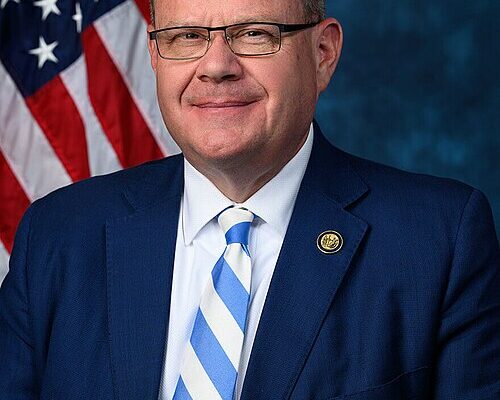
Kate Barr, a lifelong Democrat, is running in the Republican primary for North Carolina’s 14th Congressional District while publicly acknowledging that she does not share Republican views and does not consider herself a member of the party. Barr switched her voter registration to Republican and filed in November 2025 to challenge incumbent Rep. Tim Moore, with the primary scheduled for March 3, 2026.
In widely circulated interviews and podcast appearances, Barr has described herself as a progressive Democrat running under the GOP label because “that’s where the actual competition happens” in the safely Republican, Charlotte-area district, according to reports. She has referred to herself as a “fake Republican” in campaign materials and on social media, arguing that low-turnout primaries in gerrymandered districts effectively decide elections long before the general contest.
🚨#BREAKING: A lifelong Democrat in North Carolina, Kate Barr, just admitted on camera she is running as a FAKE REPUBLICAN.
“I’m not a real Republican… I’m running as a progressive in a Republican primary.”
WHAT ON EARTH?!!!!
— Matt Van Swol (@mattvanswol) February 10, 2026
Barr previously ran what she described as an intentionally unwinnable very typical liberaDemocratic campaign for state Senate in 2024 under the slogan “Clear eyes, full heart, can’t win,” framing it as a protest against partisan map-drawing even though, of course, her party is the one that does most of the gerrymandering despite complaining about it. Her current congressional bid follows the same logic, according to her public statements, which portray the campaign as an attempt to force Moore to campaign more aggressively and to build pressure for future redistricting changes, potentially after the 2030 census.
Critics say the strategy amounts to deliberate deception. Conservative commentators and social media users have labeled the effort a “Trojan horse” tactic, arguing that Republican primary voters may reasonably assume candidates share core GOP positions. They point out that Barr has not concealed her progressive views and would likely oppose Republican priorities on taxes, border enforcement, and federal spending if elected.
Barr and her campaign reject claims of secrecy, emphasizing that her non-Republican identity is openly stated. Her website and public remarks frame the candidacy as transparent protest politics rather than misrepresentation. She also co-founded the Can’t Win Victory Fund, a nonprofit that supports similar protest campaigns aimed at highlighting the effects of gerrymandering.
North Carolina law allows voters to change party registration and run in party primaries without ideological tests, making Barr’s candidacy legal. Still, opponents argue that openly boasting about being a “fake” candidate while soliciting votes under another party’s banner undermines confidence in the primary process and erodes voter trust.
Moore, a former longtime speaker of the North Carolina House who won the seat in 2024, remains the clear favorite in what is expected to be a low-turnout primary. Conservative groups and activists are urging Republican voters in the district to reject Barr decisively, warning that her campaign reflects what they describe as Democratic election interference through deception rather than persuasion.
Whether Barr’s approach galvanizes opposition or merely spotlights frustrations with the district’s political map will be tested when Republicans head to the polls on March 3. Of course, she hasn’t said anything about what Democrats are doing in “blue” states. It’s only the Republicans who aren’t supposed to gerrymander seats.
[Read More: Young Liberal Planned To Behead ICE Agents]