 By
By The Republican push to advance the SAVE America Act has reopened a familiar but unresolved argument in Washington: whether the Senate’s filibuster remains a stabilizing force—or an obstacle to governing in an era of accelerating partisan conflict.
The legislation, introduced more than a year ago by Rep. Chip Roy of Texas and recently re-released with revisions by Roy and Sen. Mike Lee of Utah, would require proof of U.S. citizenship to register for federal elections, direct states to remove noncitizens from voter rolls, and mandate that voters present an eligible photo identification document before casting a ballot. Though federal law already prohibits noncitizens from voting, Republicans have framed the bill as a necessary enforcement mechanism amid broader concerns about election integrity.
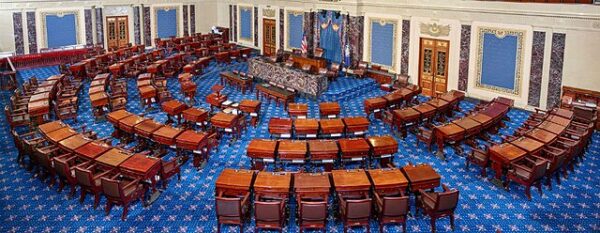
The House is expected to vote on the bill next week. Its prospects in the Senate, however, remain uncertain. Republicans hold a 53–47 majority, leaving the bill short of the 60 votes needed to overcome a filibuster under current Senate rules. Democrats have signaled unified opposition.
Senate Minority Leader Chuck Schumer has been among the most forceful critics. “Let’s be clear, the SAVE Act is not about securing our elections. It is about suppressing voters,” Schumer said. “The SAVE Act seeks to disenfranchise millions of American citizens, seize control of our elections, and fan the flames of election skepticism and denialism.” He has also described the proposal as bringing “Jim Crow type laws to the entire country.”
The SAVE Act’s biggest feature that Democrats hate revolves around requiring photo identification to vote. Apparently, roughly 80 percent of the country and 70 percent of African Americans support “Jim Crow.”
Americans agree with Nicki Minaj when it comes to voter id.
83% of favor photo voter id to vote per Pew. This includes 70%+ of Democrats and Republicans, as well as 75%+ of Americans across races…. White, Black, and Latino.
It's not controversial. pic.twitter.com/9Kocw85Uh8
— (((Harry Enten))) (@ForecasterEnten) February 3, 2026
That resistance against something so widely popular has prompted some Republicans to revisit whether the filibuster itself should be altered—specifically by restoring the so-called “talking filibuster,” which would require senators to physically hold the floor to block legislation rather than relying on the modern 60-vote threshold to end debate.
Sen. Ted Cruz of Texas argued for such a shift in a post on Twitter. “We ought to nuke the zombie filibuster and require a talking filibuster if Democrats want to try to block it,” Cruz wrote, calling the bill essential to election integrity.
I am a passionate supporter of the SAVE Act.
We ought to nuke the zombie filibuster and require a talking filibuster if Democrats want to try to block it.
Let’s force a vote and get it passed. pic.twitter.com/CaUQbiSyg7
— Senator Ted Cruz (@SenTedCruz) February 5, 2026
Rep. Anna Paulina Luna of Florida echoed that view, criticizing the current system as detached from the Senate’s original design. “The modern-day filibuster is a perversion of how the Senate was supposed to function,” she wrote. “Instead of arguing positions and attempting to pass legislation, it has become a way to avoid doing the work and to block the President’s agenda in the name of institutional supremacy, even though most of the senators got elected with help from POTUS.” She added, “I look forward to Senator Thune using the only tool that he has to get this done: the standing filibuster. Thune will be the reason that voter ID has passed when he embraces this parliamentary maneuver.”
The modern-day filibuster is a perversion of how the Senate was supposed to function. Instead of arguing positions and attempting to pass legislation, it has become a way to avoid doing the work and to block the President’s agenda in the name of institutional supremacy, even…
— Rep. Anna Paulina Luna (@RepLuna) February 5, 2026
Lee, who has met with President Donald Trump on the issue, framed the stakes more bluntly. “All that can stop it now is the Zombie Filibuster. Slay the Zombie. Pass the SAVE America Act,” he posted, describing the measure as the president’s top legislative priority.
Met with President Trump today in two different settings
First briefly this morning and then for a couple of hours this afternoon
The SAVE America Act is his top legislative priority
All that can stop it now is the Zombie Filibuster
Slay the Zombie
Pass the SAVE America Act https://t.co/KwYuBCY8Yu pic.twitter.com/ADEvghjcIa
— Mike Lee (@BasedMikeLee) February 6, 2026
Yet Senate Majority Leader John Thune of South Dakota has urged caution, signaling reluctance to make procedural changes that could have lasting consequences. “As I said, we will vote on the SAVE Act, but exercising or triggering a talking filibuster has ramifications, implications that I think everybody needs to be aware of,” Thune told reporters. “So we will have those discussions, but that obviously ties the floor up for an indefinite amount of time.”
Thune also warned that such a move could disrupt other Republican priorities, including a farm bill, permitting reform, and sanctions legislation related to Russia.
The debate underscores a broader institutional dilemma. The filibuster has long been defended as a mechanism that forces consensus, slows sudden policy swings, and protects minority viewpoints when power shifts. Even as frustration with gridlock grows, Senate leaders in both parties have historically resisted broad changes, mindful that today’s majority often becomes tomorrow’s minority.
That concern has only sharpened as partisan politics grow more volatile at the state level. In Virginia, where Democrats moved quickly to reshape election and governance rules after consolidating power, Republicans now point to a cautionary example of how Democrats will take away the filibuster anyway.
For Republicans, the temptation to weaken the filibuster in order to pass a signature election bill is understandable, particularly amid fears that Democrats, whom they see as increasingly radical, could abolish it themselves in a future Congress. But history suggests that procedural shortcuts rarely age well. The filibuster, imperfect as it is, has often functioned less as a roadblock than as a forcing mechanism, compelling negotiation, moderation, and durability in federal law.
As the SAVE America Act moves toward a Senate vote, the immediate question is whether Republicans can muster enough pressure to change the rules. The longer-term question is whether doing so would undermine the very institutional safeguards they may one day rely on. But maybe the first question is more straightforward: Why do Democrats oppose voter ID in the first place?
[Read More: Dem Governance Looks Like It Is Just A Fraud Scheme At This Point]