 By
By The United States is pressing for a new multilateral nuclear arms control agreement that would include China, following the expiration of the New START treaty with Russia and the collapse of the last binding limits on the world’s two largest nuclear arsenals.
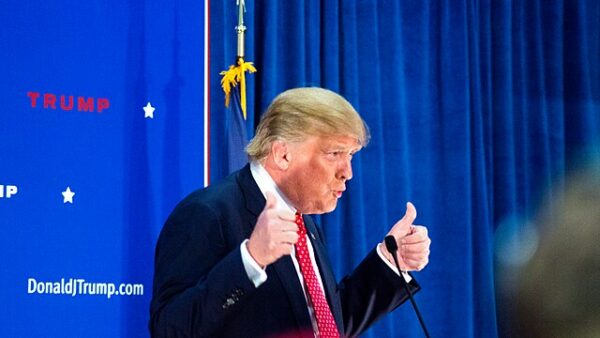
Speaking Thursday at the Conference on Disarmament in Geneva, U.S. officials argued that the strategic environment has fundamentally changed and that a bilateral framework between Washington and Moscow no longer reflects current nuclear realities. A senior administration official said President Donald Trump has long favored a broader agreement that brings additional nuclear powers to the table, reported Reuters.
“Today, the United States faces threats from multiple nuclear powers. In short, a bilateral treaty with only one nuclear power is simply inappropriate in 2026 and going forward,” said Thomas DiNanno, the U.S. under secretary of state for arms control and international security.
The New START treaty, signed in 2010, placed caps on deployed strategic nuclear warheads and delivery systems held by the United States and Russia. Its expiration on February 5 marked the first time in more than half a century that no legally binding arms control agreement constrains the two countries’ nuclear forces.
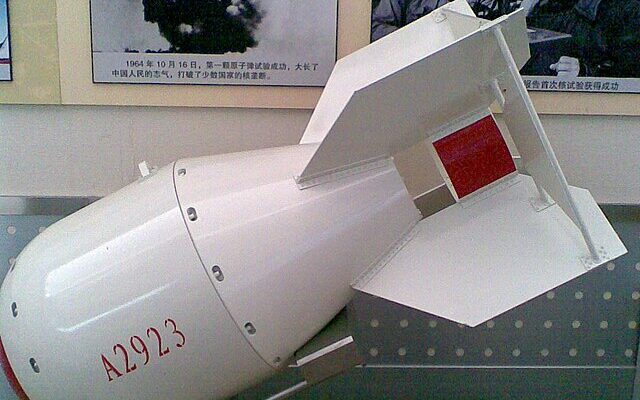
U.S. officials used the treaty’s lapse to underscore growing concerns about China’s nuclear expansion. DiNanno said Beijing’s arsenal is projected to exceed 1,000 warheads by 2030 and accused China of engaging in covert nuclear explosive testing. “I can reveal that the U.S. government is aware that China has conducted nuclear explosive tests, including preparing for tests with designated yields in the hundreds of tons,” he said. He added that Chinese forces “sought to conceal testing by obfuscating the nuclear explosions because it recognized these tests violate test ban commitments. China has used ‘decoupling’, a method to decrease the effectiveness of seismic monitoring, to hide their activities from the world.”
China forcefully rejected the allegations. Its disarmament ambassador, Shen Jian, accused Washington of exaggerating the threat posed by Beijing’s nuclear forces. “China notes that the U.S. continues in its statement to hype up the so-called China nuclear threat. China firmly opposes such false narratives,” Shen said. He also blamed the United States for escalating global competition, saying, “It (the US) is the culprit for the aggravation of the arms race.”
Shen reiterated Beijing’s refusal to join trilateral arms control talks, arguing that China’s arsenal—estimated at roughly 600 warheads—remains far smaller than those of the United States and Russia, which each possess about 4,000.
Russia has signaled openness to discussions despite the treaty’s expiration. Foreign Minister Sergei Lavrov has said Moscow prefers dialogue while preparing for multiple scenarios, and the Kremlin has pointed to previous understandings about responsible conduct in the absence of formal limits.
The U.S. push for a new agreement has drawn cautious support from allies. NATO nuclear powers Britain and France have backed updated arms control efforts that take China’s buildup into account, though they oppose Russian demands that they be formally included in negotiations.
Analysts warn that the lack of binding constraints could increase the risk of miscalculation, accelerate nuclear modernization, and further strain global stability as geopolitical tensions persist in places such as Ukraine and the Middle East. Negotiating a comprehensive replacement agreement, they say, is likely to take years, leaving a prolonged gap in international nuclear oversight.
[Read More: Trump Official Escapes Assassination Attempt]