 By
By As much of Europe moves away from liberal democratic values and continues to support some sort of identity politics leftism, Americans have found themselves at odds with their allies. In England, for example, leaders there have begun supporting marriages between cousins in order to not upset “new arrivals.” In Europe, leaders there have abandoned free speech to the point that Vice President Vance had to call them out and some have called for the United States to be kicked out of NATO.
Now, in Spain, leaders there have abandoned their commitments as a military ally to the United States.
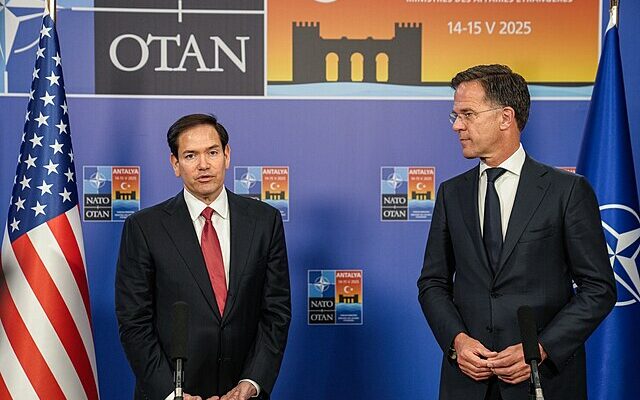
Secretary of State Marco Rubio on Wednesday raised new questions about the future of the NATO alliance, warning that U.S. commitments could be reevaluated if European allies continue to restrict American access to key military bases.
SECRETARY RUBIO: Why are we in NATO? You have to ask that question. Why do we send trillions of dollars and have all of these American forces stationed in the region, if in our time of need, we won't be allowed to use those bases? pic.twitter.com/DdYahXhli0
— Department of State (@StateDept) April 1, 2026
In remarks that underscored growing tensions within the alliance, Rubio described what he characterized as an increasingly imbalanced relationship between the United States and its partners.
“If now we have reached the point that the NATO alliance now means that we can’t use those bases… to defend America’s interests, then NATO’s a one-way street,” Rubio said. “When we need them to allow us to use their military bases, their answer is no. Then why are we in NATO? You have to ask those questions.”
Rubio indicated that a broader reassessment could follow the conclusion of the current conflict, suggesting the administration is already weighing the long-term value of its alliance commitments.
“Unfortunately, after this conflict is concluded, we are going to have to reexamine that relationship. We’re going to have to reexamine the value of NATO and alliances for our country,” he said.
The comments come amid ongoing disputes over U.S. military operations in Europe, where some NATO members have reportedly denied or limited access to bases tied to American strategic priorities. Those disputes have exposed underlying disagreements about the scope of U.S. operations and the degree to which allied infrastructure should be used to support them.
CNBC wrote that in an interview with The Telegraph newspaper, the president described the 77-year-old defensive alliance as a “paper tiger” and, when asked if he would reconsider the U.S.′ membership in the bloc after the Iran conflict ends, Trump told the paper: “Oh yes, I would say [it’s] beyond reconsideration.”
“I was never swayed by NATO. I always knew they were a paper tiger, and Putin knows that too, by the way,” he said, in comments published Wednesday.
Trump has been angered by European allies’ refusal to send warships to help reopen the Strait of Hormuz, a vital oil and gas maritime passage controlled by Iran, and at their refusal to let the U.S. use military bases to launch attacks against the Islamic Republic.
European leaders see any attempts to reopen the Strait of Hormuz as highly dangerous, as Iran continues to attack tankers in the strait that aren’t deemed to be from “friendly” nations.
Founded in 1949 as a collective defense pact aimed at deterring Soviet expansion, NATO has long served as a central pillar of U.S. foreign policy. But tensions over burden-sharing and operational control have persisted for decades, with successive administrations pressing European allies to increase defense spending while questioning the asymmetry of U.S. commitments.
Rubio’s remarks reflect a broader shift within the current administration toward a more transactional view of alliances, one that demands the alliance doesn’t mean American does everything while the allies claps.
While no formal policy changes have been announced, the comments are likely to intensify debate in Washington and across Europe about NATO’s future role and the terms under which the United States remains engaged in the alliance.
[Read More: American Journalist Kidnapped]