 By
By Federal agents on Thursday moved to close one of the most confounding loose ends from the unrest of early 2021, taking into custody a man accused of planting explosive devices outside the headquarters of both major political parties on the eve of the Capitol riot. The arrest, years in the making, represents the first substantial break in a case that has long vexed investigators and fueled doubts about the government’s ability to unravel a threat hiding in plain sight.
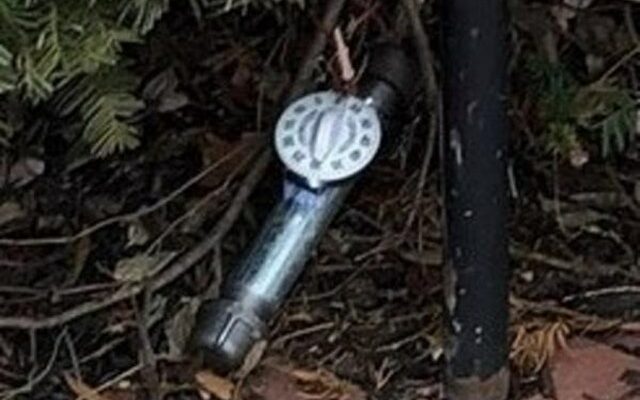
According to individuals familiar with the investigation, the Federal Bureau of Investigation detained a 30-year-old Woodbridge, Virginia, resident believed to have placed the functional devices in a residential zone near the Republican National Committee and Democratic National Committee offices. Though capable of inflicting significant harm, the bombs remained undiscovered for nearly 24 hours and ultimately failed to detonate. Officials, who spoke under anonymity given the sensitivity of the matter, said additional details will be released during a Department of Justice briefing later today.
The bomber appears to be an anarchist.
He was also connected to protecting illegal immigrants and worked to undermine ICE, according to The Daily Wire.
DAILY WIRE: Accused pipe bomber Brian Cole worked to get illegal immigrants out of ICE facilities & sued Trump's DHS. DC Court of Appeals ruled against him weeks before January 6, 2021.
He later hired Trayvon Martin's attorney to call on Biden's DOJ to punish anti-black racism. pic.twitter.com/4g95wzIqbO
— Luke Rosiak (@lukerosiak) December 4, 2025
The arrest carries political and symbolic weight. The placement of the devices unfolded as crowds loyal to former President Donald Trump converged on the Capitol in an attempt to halt the certification of Joe Biden’s electoral victory. While investigators have not publicly identified a clear motive, those informed of the case say the suspect had expressed sympathies aligned with disruptive political currents, noted MS Now. The breakthrough prompted rare bipartisan relief. House Speaker Mike Johnson called the news “obviously a great development,” adding that he expects deeper findings to emerge. Democratic National Committee chair Ken Martin echoed the sentiment, insisting, “Those responsible for this horrific act must be brought to justice, and political violence should never be accepted in America.”
What ultimately advanced the frozen inquiry was not a new forensic fragment but a systematic re-evaluation of years of collected data from 2021 and 2022. That fresh review—ordered in recent weeks—surfaced connections that had gone overlooked, raising internal questions about whether a more aggressive analysis earlier in the investigation might have spared the bureau sustained criticism for its inability to crack the case.
The development also carries institutional consequences for the FBI’s leadership. Deputy Director Dan Bongino, who elevated the dormant probe after entering office, had previously discussed the episode as a commentator, at times speculating about missteps inside the bureau. Though he has provided no evidence supporting claims he once aired regarding suppressed leads—and has not publicly walked them back—the successful arrest stands to reinforce his insistence that the matter demanded renewed focus. The timing intersects with mounting scrutiny of FBI Director Kash Patel’s stewardship, including reporting that President Trump had weighed leadership changes amid frustration with media portrayals of Patel’s security practices and travel spending.
The bombs were planted on the evening of January 5, 2021, between approximately 7:30 p.m. and 8:30 p.m., and discovered about 15 hours later. That gap gave rise to theories that the devices were intended to divert security resources as Congress prepared to meet. The FBI’s pursuit became one of the most exhaustive efforts in its recent history: agents issued sweeping subpoenas to vendors for purchases of battery components and shoes, cross-referenced sales with mobile-phone pings and surveillance images, tracked nearly 1,200 athletic-shoe transactions, and scrutinized more than 600 public tips. By early this year, the bureau had canvassed over 1,200 locations, conducted more than 1,000 interviews, and reviewed roughly 39,000 recordings, yet remained unable to match the figure captured in grainy footage to any known suspect.
Earlier in the month, investigative reporters at Blaze News pointed to a former Capitol Police officer, Shauni Rae Kerkhoff—who left the force in mid-2021 for a CIA protective assignment—as a plausible culprit, citing software analysis that claimed a 94% match between the bomber’s gait and her documented stride, including a slight leg issue from an old injury. Kerkhoff was never named a person of interest, and requests for comment from the Capitol Police, FBI, and Justice Department went unanswered. Still, the speculation fueled Republican critiques that investigators mishandled the inquiry, overlooking degraded video, forgoing certain leads, and dismissing witness observations—including those of the officer who discovered one of the devices. Representative Thomas Massie and others cast these purported lapses as evidence of institutional dysfunction.
With a suspect now in custody, those alternate narratives are likely to recede. What remains is the more consequential work: determining motive, reconstructing intent, and assessing what this long-running failure—and belated success—reveals about federal preparedness during one of the most volatile episodes in modern American politics.
[Read More: