 By
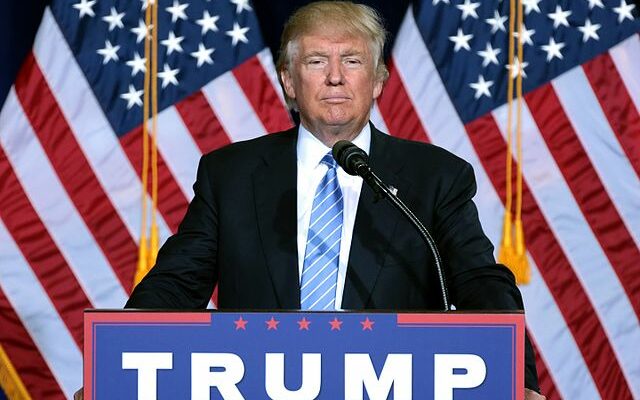
By President Donald Trump on Tuesday announced that his administration will halt all federal payments to sanctuary cities and to any states that contain them, escalating his long-running campaign against jurisdictions that limit cooperation with federal immigration enforcement.
The policy, which Trump said will take effect on February 1, 2026, was unveiled during remarks to the Detroit Economic Club, where the president paired the funding threat with sweeping claims about economic growth and renewed national strength under his leadership, according to Just The News.
Sanctuary policies, adopted by dozens of cities and several states, typically restrict local law enforcement from assisting federal immigration authorities in certain circumstances. Trump has consistently argued that such measures shield criminal activity and undermine public safety.
“Starting Feb. 1, we’re not making any payments to sanctuary cities or states having sanctuary cities because they do everything possible to protect criminals at the expense of American citizens,” Trump said. “And it breeds fraud and crime and all the other problems that come. So we’re not making any payment to anybody that supports sanctuary.”
The announcement marked one of Trump’s most direct attempts to use federal funding as leverage against state and local governments that defy his immigration agenda. Similar efforts during his first term sparked extensive legal challenges, with courts often scrutinizing whether the executive branch has the authority to condition congressionally appropriated funds on immigration compliance.
In Detroit, Trump also pointed to Minnesota as an example of what he described as unchecked fraud and administrative failure, citing recent federal actions taken there. Minnesota, home to one of the nation’s largest Somali-American communities, has faced heightened federal scrutiny over alleged abuses in government assistance programs.
“We have also suspended payments tied to suspected scammers in Minnesota, of which there are many,” Trump said. “It’s a great state. It was a great state. Now it’s getting destroyed by that stupid governor.”
The president went further, pledging aggressive enforcement against individuals convicted of fraud. He said his administration would pursue denaturalization proceedings against foreign-born Somali citizens found guilty of such crimes, a step that would strip citizenship in cases involving fraud during the naturalization process.
Trump also tied the funding crackdown to broader immigration enforcement actions already underway. The Department of Homeland Security, he noted, is terminating Temporary Protected Status for Somali migrants, ending a designation that has allowed thousands to live and work legally in the United States due to conditions in Somalia.
Supporters of Trump’s approach argue that sanctuary policies obstruct law enforcement and weaken deterrence, forcing federal authorities to shoulder the burden of immigration enforcement alone. Critics counter that cutting off funds could harm residents broadly, including U.S. citizens, by reducing resources for transportation, housing, and public safety programs unrelated to immigration.
The Detroit speech blended immigration hardlines with upbeat economic messaging, as Trump claimed the country is entering a new period of prosperity driven by his administration’s policies. He cast the funding cutoff as part of a larger effort to restore order, punish misconduct, and place the interests of American citizens first, setting the stage for what is likely to be a renewed legal and political battle with states and cities resisting federal pressure.
The confrontation is already spilling beyond funding threats and into the streets. In Minnesota, where federal immigration operations have intensified in recent days, Democratic Gov. Tim Walz is facing mounting criticism after publicly urging residents to record Immigration and Customs Enforcement agents during enforcement actions. Speaking amid heightened tensions in Minneapolis, Walz framed civilian documentation of ICE activity as a tool for potential future legal action against federal authorities—a move critics argue risks provoking direct confrontations at a moment when the legal and political fight over sanctuary policies is rapidly escalating.
TIM WALZ: "If you see these ICE agents in your neighborhood, take out that phone and hit record."
"Help us create a database of the atrocities against Minnesotans, not just to establish a record for posterity, but to bank evidence for future prosecution." pic.twitter.com/V7fCMY3WZ1
— Fox News (@FoxNews) January 15, 2026
Law enforcement officials and public safety analysts say the rhetoric from political leaders in Minnesota is blurring a critical linebetween lawful observation and interference, particularly as federal agents carry out court-authorized duties in a high-tension environment. Former federal prosecutors warn that urging civilians to confront or “monitor” agents in real time can leave residents uncertain about the bounds of their legal authority—an acute risk when officers are operating amid rapidly evolving enforcement actions and public protests sparked by recent shootings involving federal law enforcement.
Representatives of police unions have echoed these concerns, cautioning that public calls to film or challenge federal agents could embolden hostile actors and complicate coordinated operations, increasing the likelihood of physical confrontations on the ground. Critics argue that when state and local leaders frame ICE activity as illegitimate or criminal, they in effect deputize civilians into a political conflict—one that rank-and-file officers, not elected officials, must navigate in real time as tensions continue to mount in Minneapolis and beyond.Overnight, “protesters” attacked an ICE vehicle, stealing weapons from a locked trunk locker.
🇺🇸 ANTI ICE PROTESTORS STEALS WEAPONS
Rioters in Minneapolis forced open a weapons locker inside a federal vehicle and stole a rifle and ammunition before fleeing the scene.
FBI officials search for those responsible. pic.twitter.com/pclJPoqnDi
— Lord Bebo (@MyLordBebo) January 15, 2026
The actions have left some calling for Trump to invoke the Insurrection Act, which would give him broad powers over the state.
[Read More: Liberal Doctor Refuses To Answer Basic Question]