 By
By A prominent conservative investigative journalist is predicting that President Donald Trump will soon declassify intelligence related to foreign interference in the 2020 presidential election — disclosures he argues could reshape the national debate over election security and pressure the Senate to act on pending voter-verification legislation.
Appearing February 17 on The Dan Bongino Show, John Solomon, founder of Just the News, told host Dan Bongino that Trump is preparing to release previously withheld intelligence that, in his view, reveals more extensive foreign meddling in the 2020 election than was publicly acknowledged at the time.
🚨🔥John Solomon: “I think there’s some BIG, SIGNIFICANT, and very TROUBLING revelations about the vulnerabilities of our elections that the President is about to unveil to the American public.” @jsolomonReports @dbongino WATCH this…
pic.twitter.com/DmZGpQgaqB— NanLee Marie Carissimi (@NanLee1124) February 18, 2026
Solomon contended that the forthcoming disclosures would alter the political calculus in Washington by demonstrating that vulnerabilities in the election system were more significant than many officials admitted. He suggested that both adversarial nations and U.S. allies attempted to influence aspects of the electoral process and that the interference went further than earlier public reporting indicated.
The journalist referenced prior concerns, including allegations involving fake driver’s licenses shipped from China, but said the intelligence Trump is expected to unveil extends beyond those known episodes. According to Solomon, the material would directly challenge public assurances given in 2020 by senior federal officials who characterized the election as secure.
Solomon was particularly critical of former FBI Director Christopher Wray and former Cybersecurity and Infrastructure Security Agency Director Christopher Krebs, both of whom publicly stated at the time that the 2020 election was not compromised by widespread foreign interference. Solomon argued that key intelligence was withheld from the public and that declassification would provide a fuller accounting of what occurred.
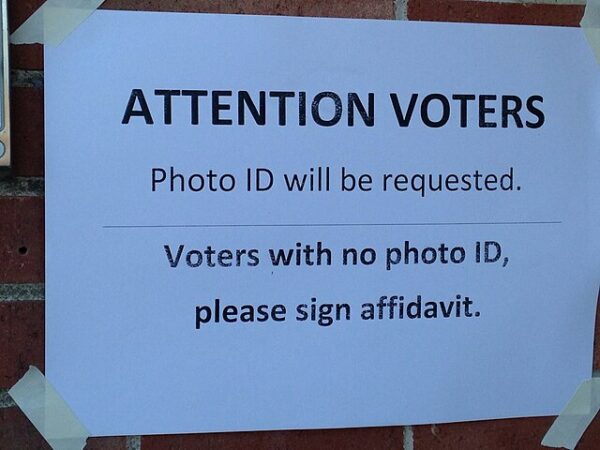
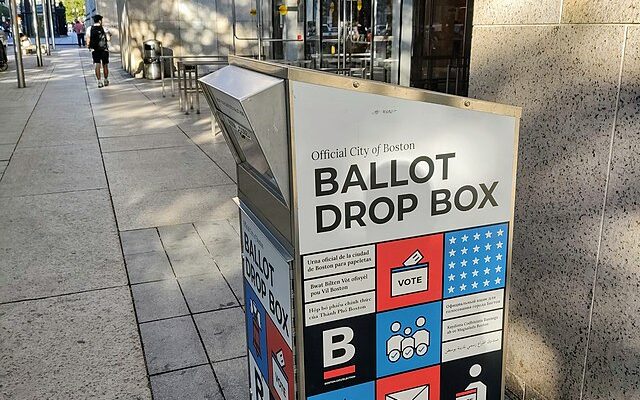
He tied the anticipated disclosures to the legislative fight over the Safeguard American Voter Eligibility Act, commonly known as the SAVE Act. The bill, which passed the House earlier this month, would require documentary proof of U.S. citizenship — such as a passport or birth certificate — for voter registration.
The legislation faces significant obstacles in the Senate, where 60 votes are required to overcome a filibuster. Senate Majority Leader John Thune and other Republican leaders have signaled hesitation about advancing the measure without broader consensus, leaving its prospects uncertain.
Senator Mike Lee has explained that they do not have to change filibuster rules to launch a “talking filibuster,” a move that would require Democrats to actually stand up and give speeches in an attempt to block the voter ID law.
To resolve any confusion:
Invoking the talking filibuster does *not* require any change to any Senate rule—just the use of existing rules & procedures that often go unused (see the video)
We don’t have to do it on every bill, but we must do it here—to pass the SAVE America Act… https://t.co/Oyy4b2S9GX pic.twitter.com/4Z2hZXFACW
— Mike Lee (@BasedMikeLee) February 18, 2026
Solomon predicted that if senators conclude their states were targeted by foreign actors, the debate over the SAVE Act would shift from a partisan dispute to a matter of national security. He argued that declassified intelligence could prompt lawmakers who are currently undecided to reconsider their positions.
January, the Department of Justice executed a search warrant at an election office in Fulton County, Georgia, seizing ballots from the 2020 presidential election as part of an ongoing federal inquiry.
According to court filings, the affidavit supporting the warrant centers on allegations of election irregularities that have circulated for years in conservative activist and investigative circles. The application reportedly references claims involving missing ballot images and discrepancies in vote tabulations — issues that some researchers have argued warrant further forensic review.
Those theories have been debated extensively since 2020, with critics dismissing them as speculative and supporters maintaining they raise unresolved procedural questions. The Justice Department has not publicly detailed the full scope of its investigation, and officials have declined to comment on what prompted the timing of the January action.
[Read More: