 By
By U.S. consumers are facing a convergence of rising gasoline prices, climbing mortgage rates, and falling stock values as American military operations against Iran enter their second month, placing new strain on household finances ahead of the midterm elections.
The conflict, known as Operation Epic Fury and launched on February 28, has disrupted global energy markets, driving a sharp increase in fuel costs. The national average price for regular gasoline has risen from $2.98 per gallon just days before the first strikes to $3.98 by late March—an increase of roughly one dollar in four weeks.
The surge is closely tied to disruptions in the Strait of Hormuz, a critical artery for global النفط shipments that previously accounted for about 20 percent of worldwide oil demand. Traffic through the strait has dropped to near zero amid the conflict, tightening supply and pushing crude prices higher.
Housing costs are also moving upward. Mortgage rates have increased for four consecutive weeks, reaching an average of 6.38 percent for a 30-year fixed loan—the highest level since September 2025. Just before the operation began, rates stood at 5.98 percent on February 26.
Financial markets have reacted sharply to the evolving situation. Analysts increasingly expect the Federal Reserve to delay planned interest rate cuts due to renewed inflationary pressure from higher energy costs. Futures markets indicated Friday that traders now assign a 52 percent probability to a rate hike before the end of the year, marking the first time such an outcome has been viewed as more likely than not.
Equities have also declined significantly. Since the start of the conflict, the U.S. stock market has lost more than $3 trillion in total market capitalization, representing a drop of over 7 percent from January levels. All three major indices have posted losses over the four-week period, explained The Daily Caller, with the S&P 500 falling 7.4 percent, the Dow Jones Industrial Average declining 7.8 percent, and the Nasdaq Composite dropping 7.6 percent.
The economic impact is unfolding just seven months before the November midterm elections, where cost-of-living concerns are expected to play a central role. Democratic candidates have already emphasized affordability issues in recent campaigns, securing several state-level victories in 2025.
Administration officials have defended the current approach, framing the economic strain as temporary. Treasury Secretary Scott Bessent, speaking on NBC’s “Meet the Press” on March 22, argued that the tradeoff is necessary for long-term security.
“The American people, are beginning to understand, thanks to President Trump, that there is no prosperity without security,” Bessent told host Kristen Welker.
He added that Americans would ultimately see “50 days of temporary elevated prices” as a reasonable cost for “50 years of not having an Iranian regime with a nuclear weapon.”
The White House did not immediately respond to a request for comment.
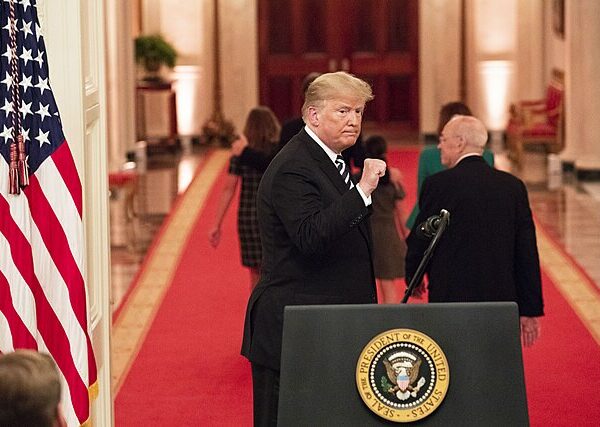
The military campaign is taking place under unified Republican control of government following President Donald Trump’s 2024 election victory, in which he frequently criticized previous U.S. military engagements abroad.
Democrats, meanwhile, have pointed to rising costs as a political opening. Florida State Rep. Emily Gregory, who recently flipped a Republican-leaning district that includes Mar-a-Lago, attributed her victory to voter frustration with economic pressures.
“Everyone is feeling that affordability crisis, and the last thing that Florida families needed when they’re struggling is $4 gas,” Gregory told CNN’s Erin Burnett on election night.
As the conflict continues and its economic effects deepen, both parties are preparing for a midterm contest likely shaped by the intersection of national security concerns and day-to-day financial pressures on American households.
[Read More: Rubio Lays Out War Timeline]