 By
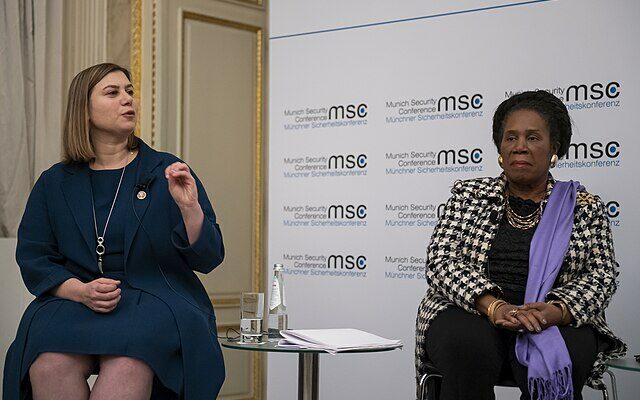
By Sen. Elissa Slotkin (D-Mich.) appeared to say the quiet part out loud during a recent town hall, claiming that requiring proof of citizenship to register to vote would make it harder for Democrats to win elections.
“The other thing that we blocked yesterday was the SAVE Act, right? Which would literally allow this administration to rig our democracy so that it would be hard for any Democrat in any state to win any election,” Slotkin said.
That is quite an argument.
The SAVE America Act would require people registering to vote in federal elections to provide documentary proof that they are United States citizens. It would also establish a national photo-identification requirement for federal voting.
In other words, the legislation is based on a straightforward principle: American elections should be decided by American citizens, and election officials should be able to verify that those registering to vote are eligible.
Slotkin nevertheless presented the measure as an effort to “rig” democracy against her party. Her choice of words immediately drew attention from Republicans, who argued that the Michigan senator had inadvertently said the quiet part out loud.
Slotkin also claimed the legislation would “disenfranchise all married women” by forcing women whose names have changed to produce birth certificates that no longer match their legal names.
Democrat Senator Elissa Slotkin: “The SAVE America Act would make it hard for any Democrat in any state to win any election.” pic.twitter.com/7FeLLgxXZf
— TheBlaze (@theblaze) July 13, 2026
That claim leaves out an important part of the legislation while also pretending that women aren’t smart enough to handle registering to vote.
The House text expressly addresses discrepancies between an applicant’s current legal name and the name appearing on citizenship documents. It requires states to establish a process through which an applicant can provide additional documentation and demonstrate citizenship when the names do not match. It also directs states to provide reasonable accommodations for applicants facing difficulties with the standard process. The legislation lists several acceptable forms of proof beyond a birth certificate, including a valid U.S. passport, qualifying identification under the REAL ID Act, certain military records, naturalization documents and other government records.
Democrats and left-wing voting organizations maintain that the requirements could burden seniors, married women, low-income citizens and other eligible voters who do not have convenient access to the necessary records. Republicans counter that establishing citizenship is a reasonable condition for joining the voter rolls and that alternative procedures can protect eligible citizens with unusual documentation.
The House approved the SAVE America Act in February by a largely party-line vote of 218–213. The legislation has since stalled in the Senate, where Republicans lack the 60 votes ordinarily needed to overcome a filibuster. A recent attempt to attach the measure to a larger immigration-funding package failed 48–50.
President Donald Trump has increased pressure on Senate Republicans to find a way forward. As New Conservative Post previously reported, Trump called for the removal of Senate Parliamentarian Elizabeth MacDonough after she determined that the proposal could not be advanced through the budget-reconciliation process.
The legislative fight also comes as courts have blocked Trump administration efforts to impose proof-of-citizenship requirements through executive action. That has left Congress as the principal route for creating a nationwide standard. New Conservative Post reported in June that federal judges had halted both a citizenship-document requirement and a separate effort to give states greater access to federal data for checking their voter rolls.
Against that backdrop, Slotkin’s statement is remarkable. She did not merely argue that the bill could create administrative problems or impose excessive burdens. She warned that it would make Democratic victories more difficult, implying that they simply rely on illegal votes.
Republicans are likely to keep reminding voters of that admission.
The question at the center of the debate remains simple: If only American citizens may legally vote in federal elections, why should verifying citizenship make it difficult for any legitimate political party to win?
[Read More: The Most Disturbing Story Yet Out Of Canada]