 By
By The Biden administration’s campaign to defend democracy came with a remarkable appetite for information about Americans who supported the other party. According to Senate Judiciary Committee Chairman Chuck Grassley, former special counsel Jack Smith’s office and the Biden Justice Department obtained personal data on at least 639,000 Republican donors, voters, and supporters—including people who contributed as little as $1.
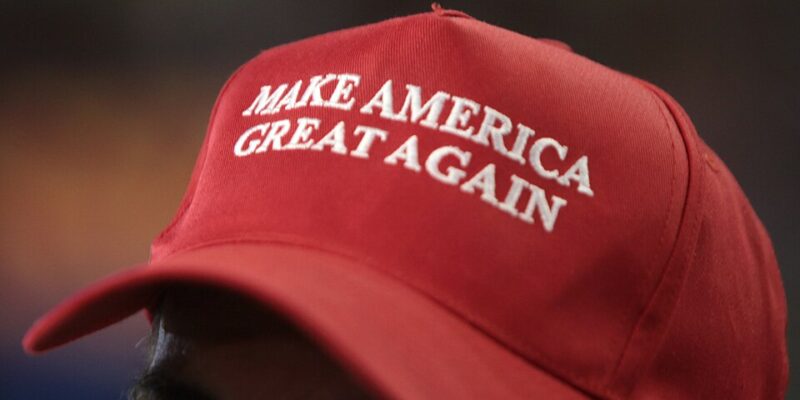
Grassley released the findings Wednesday, citing whistleblower disclosures and subpoena returns reviewed by his office. The records included birth dates, home addresses, employment information, political affiliations, donation histories, and partial credit card information. Even purchases of red MAGA hats appeared in the material investigators collected, according to the investigation.
“This update shows that Jack Smith and the Biden Justice Department collected incredibly invasive donor data – and voter data – beyond what could conceivably be necessary for Smith or his team to fulfill the Special Counsel’s mandate,” Grassley said in a statement accompanying the release. “The new findings further corroborate that Smith and his partisan team aimed to map out the entire Republican Party apparatus. I again call on my Democratic colleagues to join my oversight work instead of trying to defend Smith and sweep his abuse of authority under the rug.”
The spreadsheets described in Grassley’s memo reached well beyond prominent Republican officials and major campaign contributors. More than 148,000 rows were identified as donor records, generally involving contributions below $1,000. Listed occupations included retirees, janitors, doormen, pool technicians, drivers, loggers, and safety managers.
The information also identified congressional and state legislative districts, whether individuals were registered Republicans, and whether their contributions were recurring or one-time donations. Addresses covered most states and U.S. territories, including the home states of every member of the Senate Judiciary Committee.
Some records stretched back to 2005, roughly 15 years before the election at the center of Smith’s investigation. Grassley said the material fell “well outside Smith’s scope of purported review” and “further corroborat[es] that the Special Counsel operation was designed to map out the Republican Party.”
Some conservatives reacted to the news with shock and outrage:
Imagine sitting this election out https://t.co/iPYrEAZaBd
— ℒ ☘️ (@FletchMatlock) October 15, 2026
Investigators also obtained names of Trump campaign personnel, potentially including volunteers, along with a catalogue of campaign merchandise. Records of red MAGA hat sales included buyers’ identities, purchases, and home shipping addresses, according to Grassley.
The disclosure expands on Grassley’s September 29 findings that Smith’s team collected checks from nearly 5,000 Americans who donated to Trump and affiliated organizations. At a Judiciary Committee hearing that day, Smith acknowledged obtaining financial records.
“Yes, we acquired financial information,” Smith said, explaining that the subpoenas were issued “to conduct a criminal investigation” into what he described as “one of the most serious crimes that’s ever happened in our nation’s history.”
Arctic Frost was the FBI’s internal name for the investigation into efforts surrounding the 2020 election that later became part of Smith’s probe of Trump. Grassley’s previous disclosures described nearly 200 subpoenas seeking information about more than 400 Republican individuals and entities, as well as the collection of congressional phone toll records.
The latest findings add to a record of federal pressure on speech and conservative activism that developed while Biden and his allies portrayed themselves as democracy’s indispensable defenders.
In 2022, the administration created the Department of Homeland Security’s Disinformation Governance Board, prompting warnings that Washington was establishing a mechanism to police political speech. Its selection of Nina Jankowicz, who had cast doubt on the Hunter Biden laptop story, intensified concerns about partisan judgments masquerading as neutral expertise. The initiative was put on hold amid the backlash, and Jankowicz resigned.
The pressure on online speech extended beyond that board. As New Conservative Post previously reported, Google later acknowledged that senior Biden administration officials repeatedly pressed the company over COVID-19 content that did not violate its policies. YouTube subsequently announced a path back for creators whose channels had been terminated under discontinued COVID-19 and election policies.
Pro-life Americans faced federal prosecution as well. NCP covered the arrest of Pennsylvania father of seven Mark Houck, whose family described armed FBI agents arriving at their home over an altercation outside an abortion clinic. Houck maintained that he had been defending his son from harassment. A federal jury acquitted him in January 2023.
Those episodes involved different agencies and legal authorities, but they raise a common question about the Biden administration’s use of federal power against dissenters. Grassley’s findings bring that question down to the level of ordinary political participation: a small contribution, a campaign purchase, or a name on a supporter list. Grassley’s disclosure demands a more specific explanation for why investigating conduct surrounding the 2020 election required collecting personal information about hundreds of thousands of Republican supporters, including donation records dating to 2005. Invoking the defense of democracy does not answer that question.
[READ MORE: America Was Subsidizing One Country’s Drug Problem]