
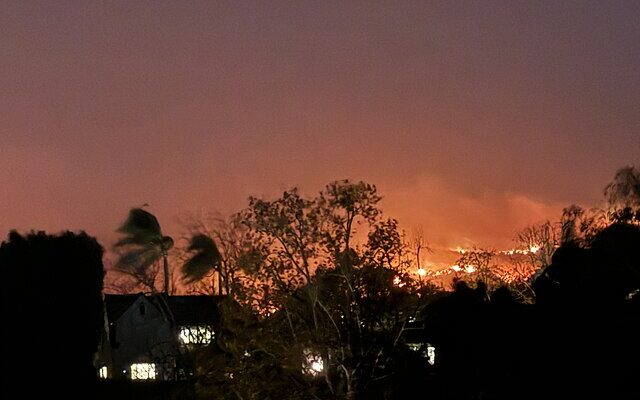



Federal prosecutors allege that the man charged with igniting the catastrophic Palisades Fire, which killed 12 people, destroyed roughly 7,000 homes and businesses, and caused an estimated $150 billion in damage, was fixated on accused UnitedHealthcare CEO killer Luigi Mangione and viewed the attack as an act of “resentment of the rich,” according to a new report by The New York Post.
Jonathan Rinderknecht, 30, an Uber driver, faces multiple federal arson charges in connection with the Lachman Fire, which began Jan. 1, 2025, in the Pacific Palisades. According to court filings, he repeatedly searched phrases such as “free Luigi Mangione” and “lets take down all the billionaires” in the weeks leading up to the blaze. Prosecutors say he also spoke to passengers about capitalism and vigilantism, describing himself as “pissed off at the world” while allegedly driving erratically.
In a trial memorandum, prosecutors state that when asked about motives for such an act, Rinderknecht said it “would be out of resentment of the rich enjoying their money as ‘we’re basically being enslaved by them’” and compared the reasoning to Mangione’s alleged crime. Passengers who rode with him on Dec. 31, 2024, and Jan. 1, 2025, described him as agitated and intensely focused on those themes.
Fueled by strong Santa Ana winds, the fire quickly grew into one of the most destructive in California history. Rinderknecht has pleaded not guilty and is being held without bail. His defense team has disputed elements of the government’s case, including the claimed source of ignition.
Prosecutors have framed the case as part of a broader pattern of anti-elite rhetoric circulating online and in popular discourse following Mangione’s case. Some commentary has argued that such narratives have contributed to a normalization of theft and rule-breaking as forms of protest.
Much of it is being fed by mainstream liberal outlets, not the dark corners of the internet. For example, A recent New York Times opinion video titled “The Rich Don’t Play by the Rules. So Why Should I?” included participants such as writer Jia Tolentino and commentator Hasan Piker discussing the concept of “microlooting,” or small-scale theft from large corporations, as a form of resistance. Piker said he was “pro-piracy all the way” and supportive of “cool crimes.” Both commentators are multi-millionaires.
Critics also point to what they describe as inconsistent enforcement of the law that gives favors to those who perform violent acts in the name of progressivism. The office of Manhattan District Attorney Alvin Bragg dropped assault charges against a woman accused of punching pro-life activist Savannah Craven Antao on camera in April 2025, despite video evidence of the incident. In Hennepin County, Minnesota, another leftwing prosecutor refused to press charges against a liberal activist, and government employee, who was caught attacking parked Teslas.
Early coverage of the Palisades Fire and related Los Angeles wildfires emphasized environmental factors such as drought and extreme weather, with less initial focus on possible arson or ideological motives. Prosecutors now say their case rests on a combination of digital searches, witness accounts, and physical evidence, including a lighter allegedly tied to Rinderknecht.
Much of the relief funds raised from millions of people from across the country have been funneled to leftwing activist groups rather than the victims of the fires.
The case is expected to test broader questions about online radicalization, class-based grievance, and what some analysts describe as “stochastic violence” directed at perceived elites. It also continues to shape debates over wildfire prevention, land management, and the extent to which cultural narratives may influence individual acts of violence.
[Read More: Trump Teases UFO Information]