 By
By Federal judges in Texas have handed down sweeping prison sentences in the July 4, 2025, attack on the Prairieland Detention Center in Alvarado, where a local police officer was shot during what prosecutors described as an organized assault on federal property.
Benjamin Song, identified by prosecutors as the leader of the group and a former Marine reservist, was sentenced Tuesday to 100 years in prison. Several co-defendants received sentences ranging from 30 to 70 years, bringing the combined punishment for the defendants sentenced so far to more than 400 years behind bars, according to The New York Times.
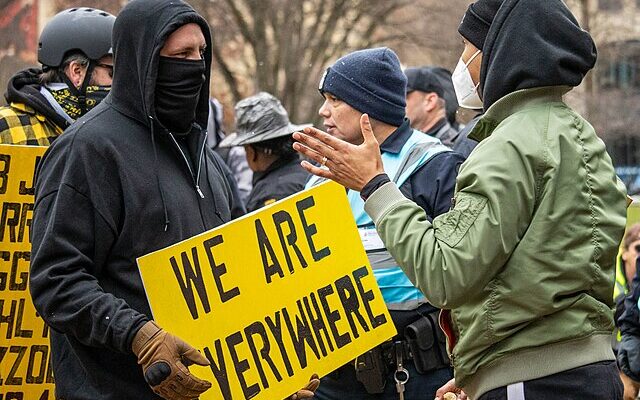
The sentences followed March convictions of nine individuals tied to the attack. Prosecutors described the group as an “Antifa cell” and said the defendants arrived at the facility dressed in black, vandalized a guard shack and vehicle, damaged a surveillance camera, and set off fireworks after dark on Independence Day.
According to court evidence, Song positioned himself away from the group with an AR-15-style rifle. When Alvarado Police Lt. Thomas Gross responded to the scene, prosecutors said Song yelled for others to get rifles and opened fire. Gross was struck above the collarbone but survived after being treated at a hospital.
Song was convicted on multiple counts, including terrorism-related charges such as providing material support to terrorists, as well as rioting, obstruction, use of explosives or fireworks, and other offenses. Six defendants convicted on similar terrorism-linked charges received prison terms of 50 to 70 years. Another defendant, who was convicted on lesser charges and was not present at the scene, received 30 years. A ninth defendant is scheduled to be sentenced next month.
Leader of ANTIFA Cell Members in North Texas SENTENCED TO 100 YEARS IN PRISON for Terrorist Attack on ICE Facility: Seven additional defendants also sentenced before one-year anniversary of attack to a combined 450 years in prison
This is the first sentencing of defendants… pic.twitter.com/euFyrANpQW
— U.S. Department of Justice (@TheJusticeDept) June 23, 2026
The trial was overseen by U.S. District Judge Mark T. Pittman, a Trump appointee. U.S. District Judge Reed O’Connor, appointed by President George W. Bush, assisted with the sentencings. Both judges are known as conservative jurists.
The case marks one of the most aggressive federal responses yet to violence aimed at immigration enforcement facilities. It also stands in sharp contrast to many of the sentences imposed after the Jan. 6, 2021, Capitol riot. The longest sentence in those cases was 22 years for Enrique Tarrio, a leader of the Proud Boys, while many of the more than 1,500 defendants prosecuted later received clemency.
Acting Attorney General Todd Blanche praised the outcome, arguing that attacks on law enforcement and federal facilities must carry severe consequences. The Justice Department has framed the case as part of a broader effort to confront violent extremism directed at immigration authorities.
Family members of the defendants denounced the proceedings outside the courthouse. Lydia Koza, wife of defendant Cameron Arnold, called the process a “grotesque distortion.” Hope Song, Benjamin Song’s mother, accused the government of building the case on political falsehoods and said her son would never accept responsibility for what she called lies.
Defense arguments portrayed the Alvarado gathering as a loud protest meant to draw attention to conditions inside the detention center. They argued that fireworks were used to alert detainees, not as weapons. Some cooperating witnesses also testified that they and their associates did not consider themselves antifa members, pointing to the movement’s decentralized nature and lack of formal membership.
Prosecutors rejected that framing. They argued that the group did not merely show up to protest, but carried out a deliberate attack on federal infrastructure and responding law enforcement. The shooting of Lt. Gross became the central fact of the case and a dividing line between claims of protest and evidence of violence.
The sentences also arrive amid rising national tensions over immigration enforcement. In June 2026, an ICE agent in Manahawkin, New Jersey, was struck by a vehicle during an attempted arrest and returned fire at the fleeing vehicle. In February, an 18-year-old in Oregon was arrested after allegedly planning attacks on ICE agents, including references to beheadings, and was found with an AR-style rifle and Molotov cocktails.
The Trump administration has made those incidents part of its broader argument that political violence against immigration officers is escalating. In September 2025, Trump signed an executive order labeling antifa a domestic terrorist organization, though federal law does not provide a formal domestic terrorism designation process comparable to foreign terrorist organization listings. A subsequent national security directive widened the administration’s approach to domestic terrorism investigations.
[Read More: Older Democrats Are Taking More Radical Stances]