 By
By The global race for artificial intelligence supremacy has found its way into a Manhattan courtroom—where federal prosecutors now allege that some of the very hardware meant to secure America’s technological edge was quietly rerouted in the opposite direction.
U.S. prosecutors have charged three individuals affiliated with Super Micro Computer Inc., including a co-founder, with conspiring to illegally export billions of dollars’ worth of servers containing advanced Nvidia artificial intelligence chips to China, in violation of U.S. export controls. The indictment, unsealed Thursday by the U.S. Attorney’s Office for the Southern District of New York, names Yih-Shyan “Wally” Liaw, Ruei-Tsan “Steven” Chang, and Ting-Wei “Willy” Sun, writes CNBC.
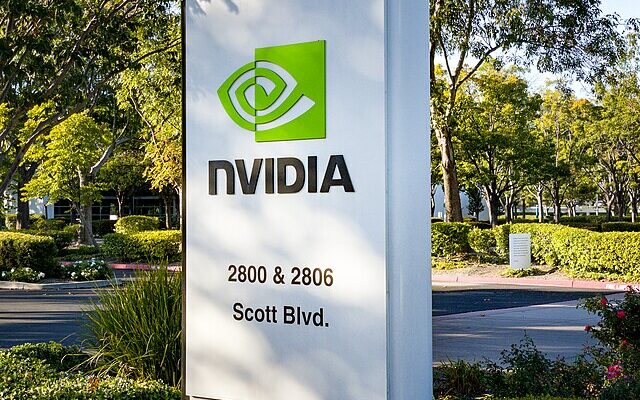
At the center of the case is a familiar pressure point in modern geopolitics: the export of high-performance computing power. According to prosecutors, the trio worked in concert to bypass restrictions under the Export Control Reform Act, diverting Nvidia-powered servers—critical for training generative AI systems—to China without the required licenses from the U.S. Department of Commerce.
U.S. prosecutors charged three Super Micro $SMCI associates, including co-founder Yih-Shyan "Wally" Liaw, with a massive $2.5 billion scheme to smuggle restricted AI technology to China.$NVDA knows the regulatory risk here is radioactive. They just dropped this statement to… https://t.co/x4GkczuAsQ pic.twitter.com/bDrhgZUFnz
— Karol Kozicki (@k2__investment) March 20, 2026
Those chips, the backbone of today’s AI boom, have become strategic assets. Washington has tightened controls in recent years to limit Beijing’s access, framing the restrictions as essential to national security. But the indictment paints a picture of a system tested not at the margins, but at scale.
Super Micro Computer, the San Jose–based server manufacturer at the center of the case, confirmed the roles of the accused: Liaw as senior vice president of business development and a board member, Chang as a sales manager in Taiwan, and Sun as a contractor. The company itself has not been charged.
In a statement, the firm moved quickly to distance itself, placing the employees on leave and severing ties with the contractor. “The conduct by these individuals alleged in the indictment is a contravention of the Company’s policies and compliance controls, including efforts to circumvent applicable export control laws and regulations,” the company said.
Prosecutors allege the operation relied on a layered deception. Shipments were routed through a middleman company in Southeast Asia, accompanied by falsified documentation suggesting the servers would remain there. In reality, authorities say, the equipment was repackaged and forwarded on to China through a parallel logistics chain designed to obscure its final destination.
To maintain the illusion, investigators say the defendants deployed decoys—so-called “dummy” servers presented during compliance inspections—while the actual hardware had already been moved. Similar tactics were allegedly used during a visit from a U.S. export control officer, alongside internal pressure campaigns to push shipments through approval channels.
The scale of the alleged operation is striking. Prosecutors claim the scheme generated roughly $2.5 billion in sales for the company since 2024, including $510 million in shipments over a matter of weeks in 2025 that ultimately reached China via the Southeast Asian intermediary. None of those exports, the government says, were authorized.
The indictment also details efforts to obstruct oversight, including attempts to block auditors from accessing certain data center areas and arrangements for a “friendly” auditor to conduct reviews. The allegations arrive against the backdrop of corporate turbulence: in 2024, Super Micro announced the resignation of its auditor, Ernst & Young, and its replacement with BDO.
Liaw, described as a significant shareholder, is also accused of pushing aggressively to incorporate more advanced Nvidia chips—specifically the B200 model built on the Blackwell architecture—into shipments, even as export rules tightened. In communications cited by prosecutors, he reportedly urged faster order fulfillment in anticipation of regulatory changes.
When news surfaced of arrests tied to AI chip smuggling, prosecutors say Liaw responded with sobbing emojis—a small but telling detail in a case built on digital trails.
Liaw and Sun were arrested Thursday. Chang remains at large.
U.S. Attorney Jay Clayton framed the case in stark terms: “Crimes involving sensitive technology must be met with swift action… otherwise the law is meaningless.”
The charges underscore a broader challenge facing U.S. policymakers. Even as Washington erects increasingly complex export controls, global demand for AI infrastructure—driven in large part by Nvidia’s industry-leading GPUs—continues to surge. Enforcement, as this case suggests, may prove as consequential as the rules themselves.
[Read More: Trump Has Plans To Keep The Oil Flowing]