





News

Democrats Negotiating With Diplomats Against Trump Foreign Policy

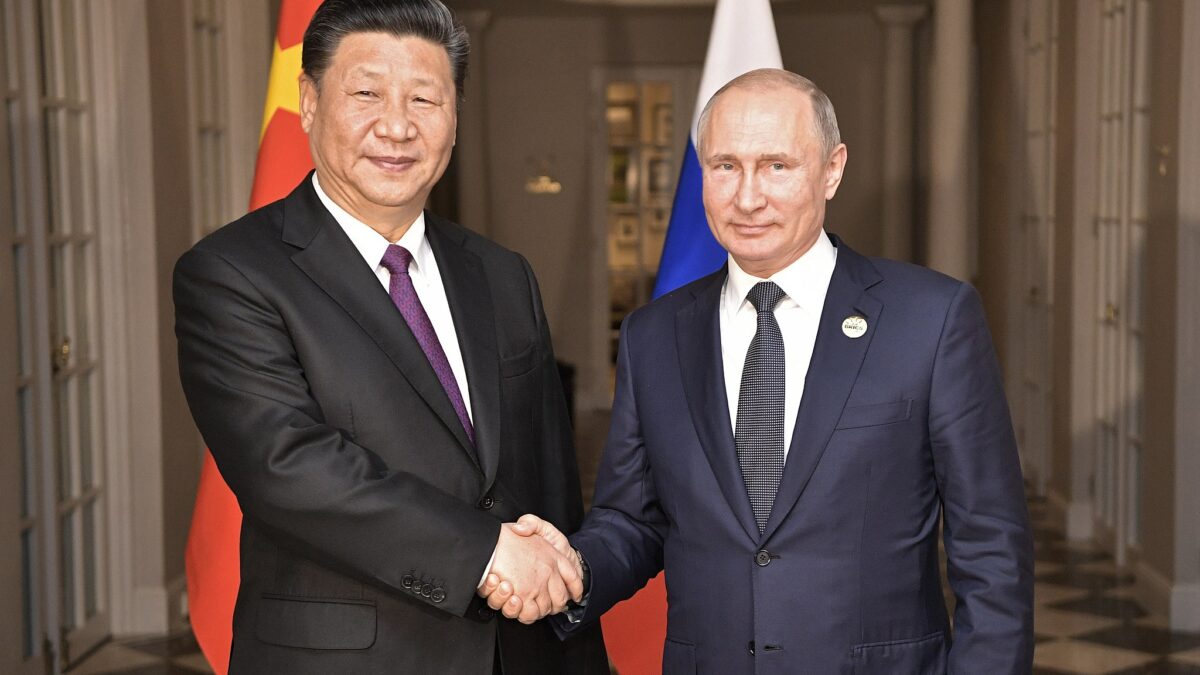
[usbotschaftberlin, Public domain, via Wikimedia Commons]

A new controversy over Rep. Pramila Jayapal’s outreach to foreign diplomats on Cuba has collided with a broader debate over how Democrats view America’s role in the world.  Jayapal, a Washington Democrat and member of the House Foreign Affairs Committee, has publicly acknowledged speaking with ambassadors from Mexico and other Latin American and African countries about oil supplies to Cuba after the Trump administration tightened sanctions and threatened penalties against countries or firms helping supply fuel to the island.

Her remarks, highlighted in a Breitbart News video drew immediate criticism accusing her of interfering with U.S. foreign policy and raised questions about the Logan Act, the rarely enforced federal law that bars unauthorized U.S. citizens from negotiating with foreign governments in ways that could undermine U.S. measures.

Jayapal described the restrictions on oil shipments to Cuba as “effectively an economic bombing of the infrastructure of the country” and “cruel collective punishment.” She argued that the policy has deepened a humanitarian crisis on the island, contributing to power outages, disruptions at hospitals, and declines in food production.

The comments followed a five-day congressional delegation to Cuba in early April with Rep. Jonathan Jackson, D-Ill. The two lawmakers met with Cuban President Miguel Díaz-Canel, Foreign Minister Bruno Rodríguez, members of parliament, dissidents, religious leaders, entrepreneurs, and ambassadors from Latin America and Africa.

After returning, Jayapal and Jackson issued a joint statement denouncing the fuel restrictions as an “illegal U.S. blockade” that had prevented significant oil deliveries for more than three months. They called for immediate negotiations and a broader reconsideration of decades of U.S. policy toward Cuba.

Jayapal later described follow-up discussions with ambassadors, including conversations about the regional effects of the sanctions on countries such as Mexico and Brazil. She also criticized U.S. pressure on banks and visa restrictions, arguing that those measures were part of a wider “strangulation” of Cuba’s economy.

The dispute has unfolded as new polling from RMG Research underscored that Democrats see the United States as a force for evil in the world. The survey, conducted April 29-30 among 1,000 registered voters, found that 51 percent of Americans view the United States as a “force for good” in the world, while 24 percent describe it as a “force for evil.”

The topline numbers masked a stark party split. Republicans overwhelmingly viewed the country positively, with a net 62-point margin saying the United States is a force for good. Democrats were nearly divided but slightly negative, with a net 2-point margin viewing the United States as a force for evil.

Most have interpreted the Democratic result as evidence of deepening anti-American sentiment. One respondent summarized that view by saying, “This is essentially ‘do you like your country, and are you proud of its history’… and most Democrats do not.”

The divide is not limited to Cuba. In late April 2026, Sen. Bernie Sanders hosted a Capitol Hill panel featuring leading AI scientists from both the U.S. and China, including Xue Lan of Tsinghua University and Zeng Yi of the Beijing Institute for AI Safety and Governance. Sanders warned that unchecked competition could lead to humanity “losing control” of the technology and potentially catastrophic outcomes, urging international dialogue and joint efforts to establish global safety standards and avert an “AI apocalypse.”

Sanders framed the issue as a shared existential threat requiring collaboration rather than rivalry, stating, “We need to cooperate. We need dialogue,” and emphasizing common interests in bridging the AI divide.

The event drew criticism from conservatives and others concerned about engaging with Chinese researchers tied to institutions linked to the Chinese government, especially amid ongoing U.S. worries over technology theft, intellectual property issues, and national security risks. Critics viewed the panel as naïve or risky, contrasting Sanders’ call for cooperation with Republican demands to maintain America’s technological edge.

Together, the Jayapal and Sanders controversies show how foreign policy fights increasingly turn on a deeper disagreement over American power itself and how Democrats simply do not think America is the leader of the free world.

You may also like

More in:News

Comments are closed.