 By
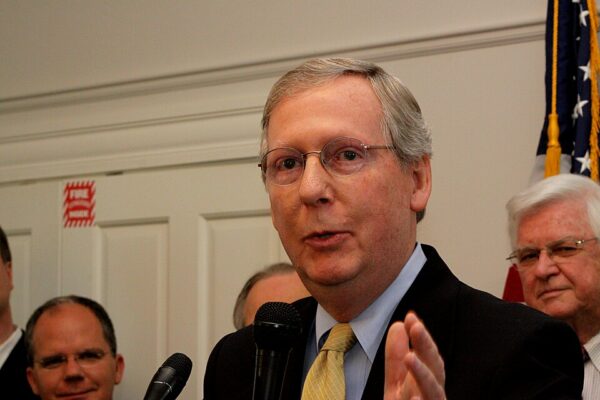
By Antisemitism is on the rise across blue states and California is no exception. Santa Clara County District Attorney Jeff Rosen has been removed from prosecuting Stanford University students accused of felony vandalism during a pro-Palestinian protest, after a judge ruled that Rosen’s public campaign against antisemitism created an appearance of conflict in the case.
The decision, issued Thursday by Santa Clara County Superior Court Judge Kelley Paul, disqualifies Rosen and his entire office from handling the prosecution. The case involves 12 students and allies accused of breaking into Stanford President Richard Saller’s office in June 2024 to protest Israel’s war against Hamas in Gaza. After an initial trial ended in a mistrial in February 2026, Rosen said he intended to retry the remaining defendants.
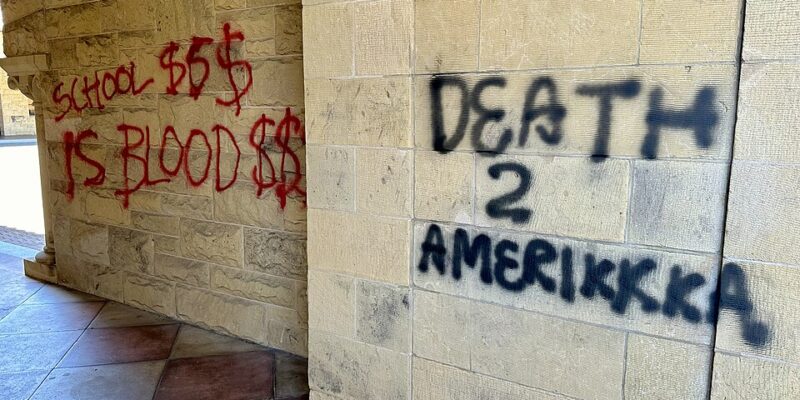
Pro-Palestine protesters at Stanford University just defaced a veteran's memorial. They spray painted a disgusting remark about America that I can't even bring myself to type
They actually took over the office of Stanford's president earlier and vowed to remain inside until… pic.twitter.com/IVG2TQyu7w
— George (@BehizyTweets) June 5, 2024
Defense attorneys argued that Rosen’s public comments and fundraising around antisemitism compromised his neutrality. In court filings, Defense Attorney Avi Singh wrote: “DA Rosen is not entitled to continue to pursue a case where he falsely describes the prosecution of the defendants as part of his fight against antisemitism while attempting to raise campaign dollars off that false description.”
It’s hard to believe that the judge would make such a ruling if Rosen wasn’t Jewish.
At issue was a webpage Rosen created to highlight his office’s work combating antisemitism. The page referenced the Stanford prosecution and was promoted in an email blast to more than 600 supporters in Los Angeles County before a December 2025 campaign event. The materials tied Rosen’s work to support for “America, the State of Israel, the Jewish People, and Judaism.” Court records showed Rosen raised $10,000 during that period.
Judge Paul acknowledged Rosen’s First Amendment rights and his commitment to opposing antisemitism, but said prosecutors must exercise “caution and care” when connecting active criminal cases to political fundraising. She ruled that the Stanford case “is not a hate-crime case” and should not be framed as part of an antisemitism campaign.
The ruling exposes a broader and increasingly familiar tension in American politics: as antisemitism has surged since Hamas’s Oct. 7, 2023, attack on Israel, some on the political left have treated institutional efforts to oppose antisemitism as suspect, partisan, or inherently biased against pro-Palestinian activism.
That pattern has been visible elsewhere. Progressive Democrats have repeatedly downplayed or defended campus protests even as Jewish students faced harassment, intimidation, and threats. President Biden, during the 2024 campus encampment unrest, condemned antisemitism while immediately adding language that critics saw as moral hedging. Other Democratic officials have faced scrutiny for maintaining relationships with activists or clerics accused of antisemitic rhetoric.
The Rosen case now places that debate inside the criminal justice system. Critics of the district attorney did not establish that the underlying vandalism prosecution was improper. Instead, they argued that Rosen’s public opposition to antisemitism made him too biased to handle a case involving anti-Israel protesters.
The Attorney General’s office, defending Rosen, argued that he had not vilified or defamed the defendants. Prosecutors have also maintained that the case is about conduct, not speech.
The remaining defendants — German Gonzalez, Maya Burke, Taylor McCann, Amy Jing Zhai, and Hunter Taylor-Black — face felony vandalism and conspiracy charges. Some other participants have already accepted plea agreements or diversion. The California Attorney General’s office may now take over the prosecution.
The charges stem from a June 2024 occupation of the Stanford president’s office. Prosecutors say demonstrators broke a window to enter the building, barricaded doors, spilled fake blood, and caused an estimated $300,000 in damage to offices, furniture, and an antique clock.
Rosen previously drew a distinction between protected expression and criminal conduct, saying: “Pouring invective on social media is not against the law. Pouring fake blood all over someone else’s workplace is.”
Defense attorneys have portrayed the protest as largely peaceful, arguing that participants tried to limit damage and did not intend to remain in the office for an extended period. Supporters placed the occupation in the context of more than 20 earlier campus protests demanding that Stanford divest from companies connected to Israel.
But the court’s decision carries significance beyond the facts of the vandalism case. It risks reinforcing the idea that a Jewish public official, or any official who speaks forcefully against antisemitism, cannot fairly enforce neutral laws when those laws involve anti-Israel activists.
That is the old “dual loyalty” suspicion in modern form: the claim that Jewish officials or pro-Israel advocates are inherently compromised when matters involving Israel, Jewish identity, or antisemitism enter public life.
The same suspicion has appeared across left-wing discourse in recent years, as anti-Israel activism has often blurred into claims that Jewish donors, Jewish politicians, or Jewish institutions exercise improper influence over public policy. It’s a belief that has seen a rapid surge in antisemitic violence across the United States over the past few years.
SURGE OF HATE: New data reveals a staggering 893% spike in antisemitic attacks over the past decade, underscoring the nearly 9,500 incidents reported just last year.@OutnumberedFNC pic.twitter.com/L8mzCK1Vqw
— Fox News (@FoxNews) December 15, 2025
The Santa Clara DA’s office said it disagreed with the ruling but would comply.
“While we disagree with the judge’s ruling, we respect it,” the office said.
The case now moves toward a new prosecutorial authority, while the underlying question remains unresolved: whether public officials can denounce antisemitism and still stand in good graces with liberal judges.